Gray hair: Why it occurs and how you can prevent it
Gray hair is a part of life – a natural process that begins for everyone at some point. While some discover their first silver strands in their twenties, others remain unaffected by this sign of aging until their fifties. In this comprehensive guide, the AS Clinic explains the scientific background of graying, when it typically begins, and what options are available to counteract this process.

The most important information at a glance
Grey hair is a natural aging process caused by reduced melanin production in the hair follicles.
The age at which hair turns gray is individual and strongly influenced by genetics.
Oxidative stress and nutrient deficiencies can accelerate premature graying.
State-of-the-art treatment approaches such as PRP therapy show promising results.
The AS Clinic offers specialized diagnostic and treatment concepts for those affected.
The biology of hair color
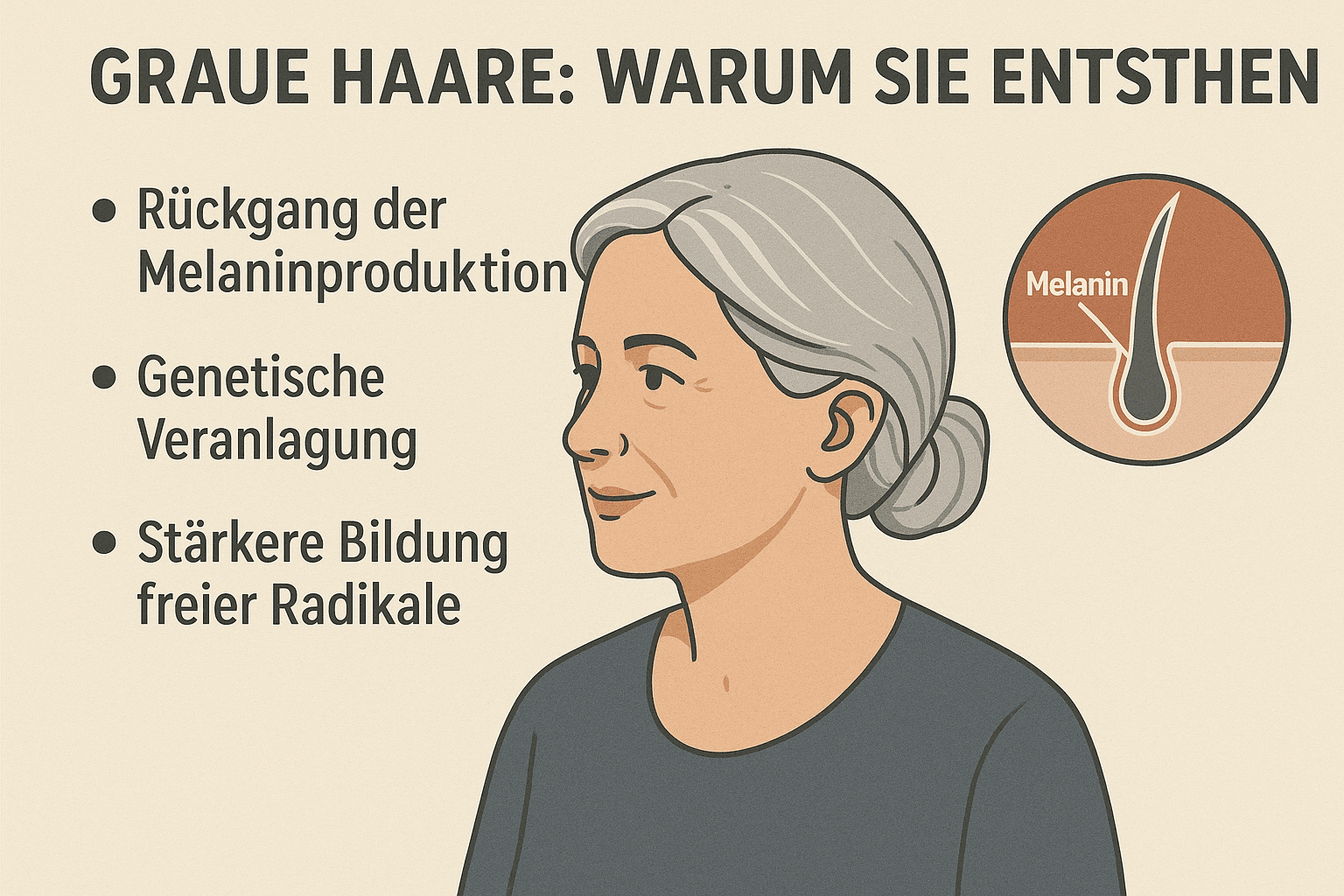
The color of our hair is determined by special pigments called melanins. These pigments are produced by specialized cells called melanocytes , which are located in the hair follicles.

Melanin as a natural pigment
There are two main types of melanin:

Eumelanin: Responsible for black and brown hair tones
Pheomelanin: Provides red and blonde hair tones
The specific combination and concentration of these melanins determines each person's individual hair color. A higher concentration of eumelanin leads to darker hair colors, while a higher concentration of pheomelanin leads to red or blond hair tones.
The hair cycle and pigmentation
Unlike skin, where pigment formation is a continuous process, hair pigmentation is closely linked to the phases of the hair cycle:
Anagen phase(growth phase): This is when active pigmentation takes place.
Catagen phase(transition phase): Pigment production slows down.
Telogen phase(resting phase): No pigment production
These phases are important for understanding why and how hair can turn gray, as disruptions in this cycle can affect pigmentation.
Why does hair turn gray?
The graying of hair is a complex biological process that is influenced by various factors.
Genetic factors and heredity
The genes we inherit from our parents play a crucial role in when and how quickly our hair turns gray. Recent research has identified several genes associated with the graying process:
IRF4 gene: Regulates melanin production
MITF gene: Controls the development and function of melanocytes
Bcl2 gene: Influences the survival of melanocytes
If your parents or grandparents went gray early, you are more likely to also get gray hair earlier.
Oxidative stress and melanocytes
One of the main causes of graying hair is oxidative stress . Over time, free radicals accumulate in our bodies, which can damage melanocytes. These highly reactive molecules attack the DNA and proteins of the pigment cells, which can lead to reduced melanin production.
The body possesses natural defense mechanisms against oxidative stress in the form of antioxidants. However, with increasing age, the efficiency of these protective systems decreases, which accelerates the graying process.
Stress and psychological strain
For a long time, it was considered a myth that stress could cause gray hair. However, recent studies confirm that persistent psychological stress can indeed accelerate the graying process. Under severe stress, the body releases increased amounts of stress hormones such as cortisol and norepinephrine, which can damage the melanocyte stem cells in the hair follicle.
Particularly interesting: In some people, stress-related graying can even be reversible if the triggering stress factor is eliminated, as a 2021 study from Columbia University shows.
Nutrient deficiency as a trigger
Various vitamin and mineral deficiencies can affect the graying process:
Vitamin B12: A deficiency can lead to premature graying.
Iron: Important for pigment production and healthy hair growth
Copper: Essential for melanin synthesis
Zinc: Supports the function of melanocytes
Vitamin D: Plays a role in activating hair follicles.
Particularly in people with premature graying (before the age of 30), lower levels of these nutrients have been found.
When do you get gray hairs?
The time at which the first grey hairs appear can vary greatly and is influenced by various factors.
Typical age for first gray hairs
Most people notice their first gray hairs between the ages of 30 and 40, but it's not uncommon for the process to begin as early as one's 20s. Scientific studies show the following average ages of graying:
Caucasian population: From mid-30s
Asian population: From the late 30s onwards
African population: From mid-40s
By the age of 50, approximately 50% of all people have visibly grey hair, regardless of their ethnic origin.
Premature graying: Causes and diagnosis
When gray hair appears before the age of 20 in Caucasians or before the age of 30 in people of African or Asian descent, it is called premature graying (canities praematura). Possible causes include:
Genetic factors: Strong familial predisposition
Autoimmune diseases: such as vitiligo or thyroid diseases
Nutritional deficiencies: especially B vitamins and minerals
Chronic stress: Persistent psychological strain
Certain medications: e.g., chloroquine or some chemotherapeutic agents
In cases of premature graying, the AS Clinic recommends a thorough diagnosis to rule out any underlying health problems.
Patterns of graying
Graying typically follows a specific pattern:
In men, it often starts at the temples and beard.
In women, graying often first becomes apparent along the hairline.
The hair at the back of the head retains its color the longest.
It's important to understand that graying is a gradual process and doesn't happen overnight. Initially, only individual hairs are affected, before more and more hairs lose their pigmentation over time.
Preventive measures against grey hair
Although graying hair is a natural part of the aging process, there are measures that can help slow down the process.
Optimal nutrition for healthy hair pigmentation
A balanced diet can support hair health and melanin production:
Vitamin B12: Found in fish, eggs, dairy products and meat
Folic acid: Found in green leafy vegetables, legumes and whole grain products
Iron: Found in red meat, spinach, and lentils
Copper: Found in nuts, seeds, oysters, and legumes
Zinc: Found in seafood, pumpkin seeds and whole grain products
Vitamin D: Found in fatty fish, egg yolks, and through sunlight
In cases of proven nutrient deficiency, AS -Clinic can recommend targeted nutritional supplements to support natural pigmentation.
Antioxidants against oxidative stress
Antioxidants can help reduce oxidative stress, which damages melanocytes:
Vitamin E: Found in nuts, seeds and vegetable oils
Vitamin C: Found in citrus fruits, bell peppers, and berries
Polyphenols: Found in green tea, dark chocolate, and berries
Selenium: Found in Brazil nuts, tuna, and whole grain products
Lifestyle changes to delay graying
Besides diet, other lifestyle factors can influence graying:
Stress management: Regular relaxation techniques such as meditation, yoga, or breathing exercises.
Quit smoking: Smoking has been proven to accelerate the aging process, including graying hair.
Sun protection: UV radiation can damage melanocytes.
Sufficient sleep: Important for cell regeneration and stress reduction
Regular exercise: Promotes blood circulation and reduces oxidative stress
Medical treatment options
For people who want to actively combat grey hair, modern medicine offers various approaches.
PRP therapy (Platelet-Rich Plasma)
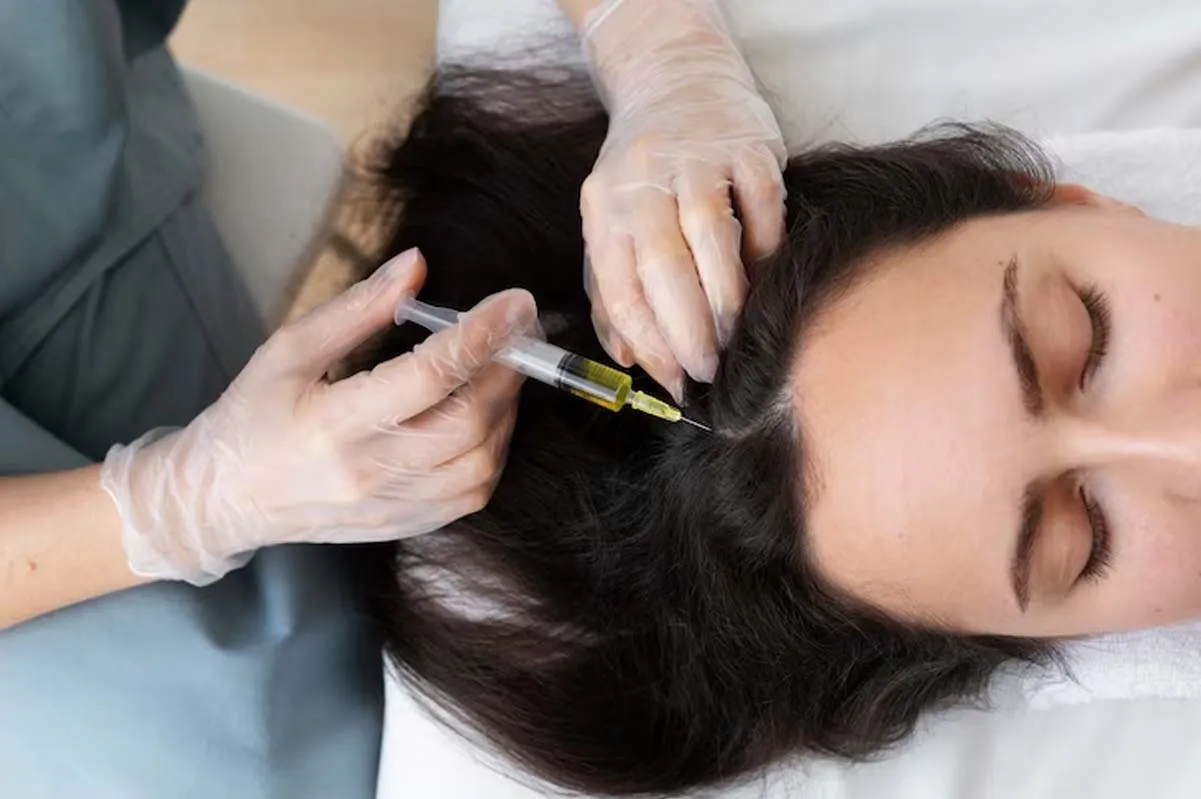
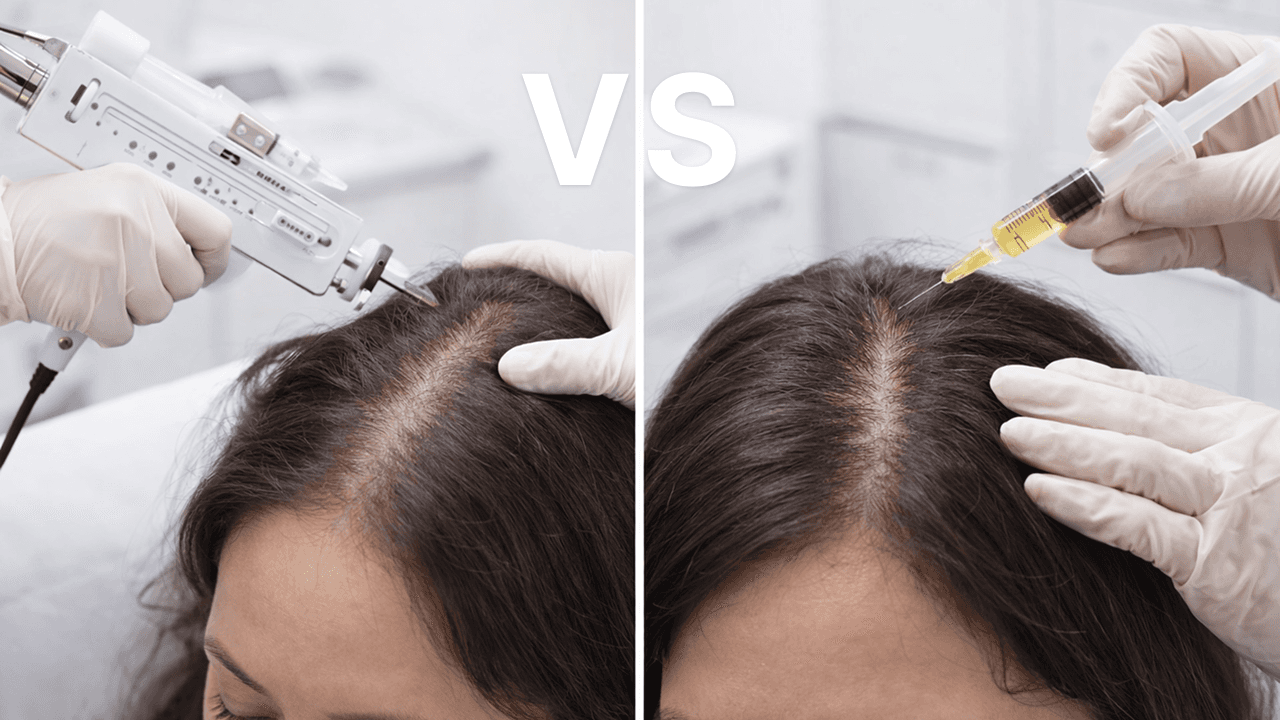
PRP therapy is a promising approach for treating gray hair. In this treatment, blood is drawn from the patient, the platelet-rich plasma is extracted, and injected into the scalp. The growth factors it contains can:
Improve blood circulation in the scalp
Stimulate the activity of melanocytes
Supplying the hair roots with essential nutrients
AS -Clinic has achieved positive results with this method in many patients, especially when PRP therapy is started early in the graying process.
Stem cell therapy to stimulate melanogenesis
Stem cell therapy is an innovative approach that aims to reactivate melanocyte stem cells. This treatment is still in the research and development phase, but shows promising results in early studies.
Laser treatments for hair follicles
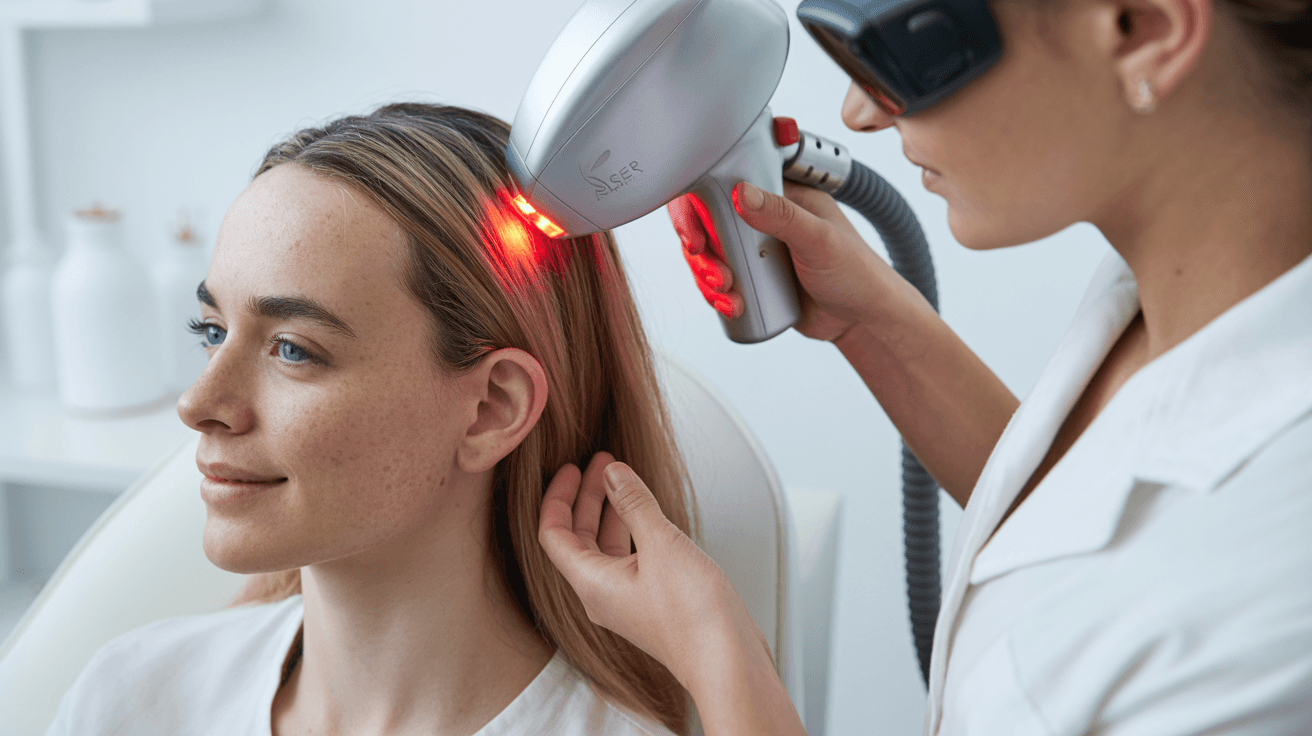
Low-level laser therapy (LLLT) can improve microcirculation in the scalp and stimulate metabolism in the hair follicles. These treatments can promote overall hair health and may slow down the graying process.
New active ingredients in research
Current scientific studies focus on various active ingredients that show potential to stimulate melanin production:
Catalase enzymes: Reduce hydrogen peroxide, which inhibits melanin production.
Melanocyte-stimulating hormones (MSH): Promote melanin production
Wnt pathway activators: Activate melanocyte stem cells
These research approaches could lead to new treatment methods in the future.
AS-Clinic Expertise in Hair Changes
AS -Clinic has established itself as a leading center for the treatment of hair loss and hair changes, with particular expertise in the area of premature graying.
Specific diagnostics to determine the cause
In cases of premature graying, a thorough diagnosis is crucial to identify the individual causes:
Detailed medical history: recording of family history, lifestyle and dietary habits
Hair microscopy: Detailed examination of hair structure and pigmentation
Laboratory tests: Analysis of nutrient status, hormone levels and possible autoimmune markers
Trichotest: Analysis of scalp health and the hair cycle
Individualized treatment concepts
Based on the diagnostic results, the AS-Clinic develops tailored treatment concepts:
Targeted nutrient therapy: Correction of deficiencies that influence graying
PRP treatments: Stimulation of melanocytes by the body's own growth factors
Combined laser and mesotherapy: To improve blood circulation and nutrient supply
Individual care recommendations: For the optimal care of grey hair
Sustainable success through a holistic approach
AS -Clinic takes a holistic approach that not only treats the symptoms of gray hair but also addresses the underlying causes. This leads to more lasting results and improved overall hair health.
By combining different treatment methods and providing continuous support to the patient, impressive improvements can often be achieved, as documented by numerous before-and-after pictures in the clinic.
Living with grey hair
Not everyone wants to fight against grey hair – many people choose to embrace their natural change and make the best of it.
Care and styling of grey hair
Grey hair has a different structure than pigmented hair and therefore requires adapted care:
Special shampoos: Products with bluish or violet pigments can neutralize yellow tones.
More intensive hydration: Gray hair is often drier and requires more care.
UV protection: Grey hair lacks the natural UV protection provided by melanin.
The silver trend: Gray hair as a fashion statement
In recent years, a remarkable trend has emerged: More and more people are embracing their gray hair or even intentionally dyeing it gray. This "silver look" or "granny hair" is not only a statement of self-acceptance but also a fashion statement worn by stars and influencers worldwide.
Frequently asked questions about grey hair
Can grey hair regain its natural color?
In certain cases, yes, especially if the graying was caused by stress or nutritional deficiency. However, in cases of genetically determined graying, a complete restoration of the original hair color is unlikely.
Does plucking out gray hairs accelerate the graying process?
No, plucking out individual gray hairs does not cause more gray hairs to grow back. However, repeated plucking can damage the hair follicles and lead to thinner hair or even permanent hair loss.
Is premature graying a sign of health problems?
It's possible. Premature graying can indicate nutritional deficiencies, thyroid problems, or other health issues. If graying occurs unusually early, a medical examination is advisable.
Does stress really affect hair color?
Yes, recent research confirms that chronic stress can accelerate the graying process. In some people, stress-related graying can even be partially reversible if the stress is reduced.
Conclusion and contact information for the AS Clinic
The graying of hair is a complex biological process influenced by genetic, environmental, and lifestyle factors. Although it is a natural part of aging, there are now more ways than ever to slow the process or to embrace gray hair with confidence.
AS -Clinic offers comprehensive support – from diagnosis and treatment to personalized care recommendations. Our experienced team, led by Ali Reza Simaee, has over 12 years of experience treating hair disorders.
Contact information and consultation services of the AS-Clinic
AS -Clinic is your specialist for all questions concerning gray hair and hair changes. Schedule a consultation today and learn about your individual treatment options.