Hair loss due to smoking: differences between men and women Table of contents
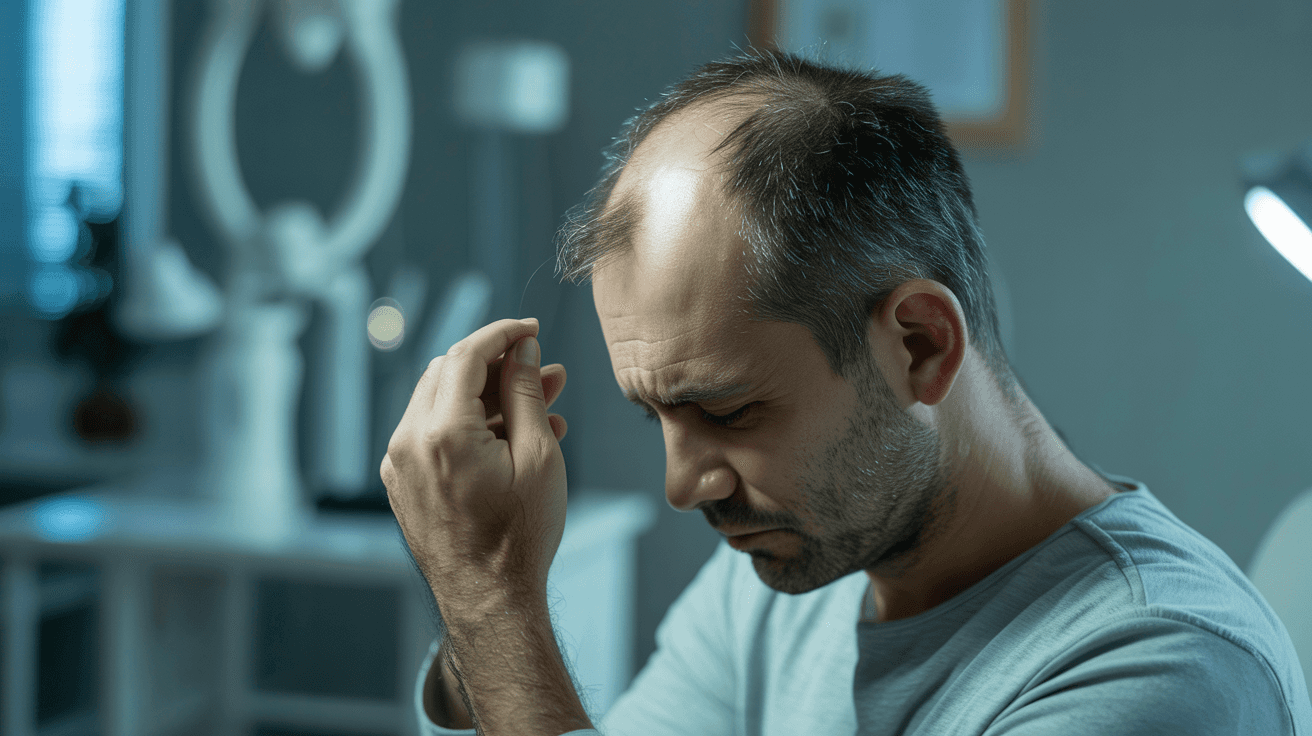
Smoking not only damages the lungs and cardiovascular system, but also has a significant impact on our hair. While the health risks of tobacco use are widely known, the link between smoking and hair loss is often underestimated. Particularly interesting is the fact that the effects differ significantly between men and women. In this comprehensive guide, AS-Clinic explains the scientific background and highlights gender-specific differences as well as effective treatment options.

What happens in the body when we smoke?Tobacco smoke contains over 7,000 different chemicals, at least 69 of which are considered carcinogenic. These toxins enter the bloodstream via the lungs and are thus distributed throughout the body. The most important harmful components for hair health are:
Harmful substance | Impact on hair health |
|---|---|
nicotine | Causes vasoconstriction and reduced blood flow to the scalp. |
Carbon monoxide | It reduces the oxygen content in the blood and thus the nutrient supply to the hair follicles. |
Benzopyrene | They damage the DNA of hair follicle cells |
formaldehyde | Promotes oxidative stress and inflammatory responses |
Acrolein | It disrupts protein synthesis, which is necessary for healthy hair growth. |
These substances impair hair health in various ways, which we will examine in more detail below.
The scientific link between smoking and hair lossResearch in recent years has provided increasingly strong evidence for the link between smoking and hair loss. A landmark 2020 study compared 500 smokers with 500 non-smokers aged 20-35 and found that 425 of the smokers (85%) showed signs of hair loss, compared to only 200 (40%) of the non-smokers. Several scientifically proven mechanisms explain how smoking leads to hair loss:

Circulatory disorders in the scalpNicotine and other toxins in tobacco smoke cause vasoconstriction. This leads to reduced blood flow to the scalp and consequently to a reduced supply of oxygen and nutrients to the hair follicles. A systematic review by Babadjouni et al. (2021) confirmed that these circulatory disturbances can weaken the hair roots.
Oxidative stress and DNA damageSmoking significantly increases the production of free radicals in the body. These reactive molecules can damage the DNA of hair follicle cells and lead to premature cell aging. A study by Trüeb et al. (2018) showed that the cells in the hair follicles of bald scalp areas are particularly sensitive to oxidative stress.
"Oxidative stress from smoking leads to DNA damage in the hair follicles and impairs their ability to produce healthy hair." – Prof. Dr. Ralph M. Trüeb, dermatologist and hair expert
Hormonal changesSmoking affects hormone levels in the body. In women, it can lead to increased hydroxylation of estradiol and inhibition of the aromatase enzyme, resulting in a relative estrogen deficiency. In men, smoking can affect testosterone levels and promote the conversion of testosterone to dihydrotestosterone (DHT), which can accelerate hereditary hair loss.
Differences in men: Specific risk factorsMale smokers are particularly prone to hair loss, which can be explained by several gender-specific factors:
Increased genetic predisposition to hair lossMen have a genetically higher probability of developing androgenetic alopecia (male pattern baldness). Smoking can significantly accelerate this process. A twin study by Gatherwright et al. (2013) with 92 male identical twins showed that the smoking twin had significantly more hair loss in the frontal and crown areas than his non-smoking brother.
Interaction with male hormonesTobacco use can affect testosterone metabolism and lead to elevated DHT levels. DHT binds to androgen receptors in hair follicles, causing them to shrink (miniaturize), which is typical of male pattern baldness.
Typical patterns of smoking-related hair loss in menIn male smokers, hair loss often manifests as an accelerated progression of the classic male pattern:

More pronounced receding hairline
Faster progression of baldness on the top of the head
Thinner hair at the parting.
Earlier onset of hair loss (often as early as one's 20s)The study by Salem et al. (2020) found that 47% of male smokers had already reached grade 3 on the Hamilton-Norwood scale and 24% even grade 4, while only 10% of non-smokers had reached these advanced stages.
Differences in women: Specific risk factorsWomen often experience the effects of smoking on their hair differently than men, which is due to gender-specific biological differences:
Hormonal differences and their significanceEstrogen plays an important role in women's hair health. It prolongs the growth phase of hair and promotes thickness and shine. Smoking leads to a relative estrogen deficiency, which can negatively affect hair growth.
Estrogen levels and the effects of smokingThe increased hydroxylation of estradiol and the inhibition of aromatase create a hormonal imbalance in women who smoke. This can lead to a relative dominance of androgens, which increases the risk of diffuse hair loss.
Typical patterns of smoking-related hair loss in womenUnlike in men, hair loss in women usually does not manifest as progressive baldness, but rather as:
Diffuse thinning of the hair, especially on the top of the head
Widening of the center part
General reduction in hair density
Thinner and more brittle hairInterestingly, a study by Yeo et al. showed that the association between smoking and hair loss is less clear in women than in men. However, another study by Gatherwright et al. (2012) with 98 female monozygotic twins found a significant association between smoking and frontal hair thinning in women.
Specific risk factors (birth control pill, pregnancy, menopause)Women who smoke and take hormonal contraceptives have an increased risk of hair loss because the interaction between nicotine and the hormones in the pill can further disrupt estrogen levels. Many women already experience temporary hair loss during pregnancy and after childbirth due to hormonal changes. This effect can be more pronounced and last longer in smokers. During menopause, estrogen levels naturally decline, which can lead to hair loss. Smoking can accelerate and intensify this process.
Other factors that influence smoking-related hair lossIn addition to gender-specific differences, there are other factors that influence the relationship between smoking and hair loss:
Age and duration of smokingThe longer someone smokes, the greater the risk of hair loss. A study by Su and Chen (2007) showed a significant correlation between smoking duration and the severity of androgenetic alopecia.
Number of cigarettes smoked dailyThe amount of tobacco consumed plays a crucial role. The same study found that people who smoked more than 20 cigarettes per day had a 2.34 times higher risk of moderate to severe hair loss compared to non-smokers.
Genetic factors and family historySmoking increases the genetic predisposition to hair loss. If hair loss already runs in your family, smoking significantly increases the risk and accelerates the process.
Diet and lifestyle as additional factorsSmokers often have an overall unhealthier lifestyle with poorer diet, higher alcohol consumption, and less exercise. These factors can further contribute to hair loss.
Diagnosis of smoking-related hair lossThe diagnosis of smoking-related hair loss requires a thorough examination and medical history:
How experts can identify smoking-related hair lossSpecialists in dermatology and hair care, such as the experts at the AS-Clinic, can identify smoking-related hair loss based on various characteristics:
Distribution pattern of hair loss
Condition of the scalp (often reduced blood flow)
Hair quality (often thinner and more brittle)
Premature graying of the hair as a side effect
Differentiation from other forms of hair lossSmoking-related hair loss must be distinguished from other causes, such as:
Hereditary hair loss
Hormonally induced hair loss
Stress-related hair loss (telogen effluvium)
Alopecia areata (circular hair loss)
Nutrient deficiency
Diagnostic procedures at the AS ClinicThe AS Clinic uses state-of-the-art diagnostic procedures:
Digital hair microscopy for assessing hair root quality
Blood tests to rule out other causes
Trichogram for determining the hair cycle
Detailed medical history including smoking habits
When you should see a specialistYou should consult a hair specialist if:
You notice sudden or unusually severe hair loss
Her hair loss appears to be related to smoking.
If you, as a smoker, would like to take preventive measures against hair loss
You have quit smoking, but continue to suffer from hair loss
Treatment options for smoking-related hair lossFor smoking-related hair loss, there are various treatment approaches that must be adapted depending on gender and individual situation:
Smoking cessation as a first stepThe most important step is quitting smoking. Studies show that blood circulation in the scalp can improve just a few weeks after quitting smoking. The AS Clinic offers support for quitting smoking as part of a holistic treatment concept.
Drug therapiesDepending on gender and type of hair loss, different medications can be used:
Active ingredient | Application | Especially suitable for |
|---|---|---|
Minoxidil | Topical application as a solution or foam | Men and women |
Finasteride | Oral (for men only) | Men with androgenetic alopecia |
Alfatradiol | Topical | Women with hormonally related hair loss |
Spironolactone | Oral (for women only) | Women with androgenetic alopecia |
Nutritional supplements and special care productsSmokers often have an increased need for certain nutrients that are important for hair growth:
Biotin (Vitamin B7)
zinc
iron
Vitamin D
Antioxidants such as vitamins E and CSpecial hair shampoos with blood circulation-enhancing ingredients such as caffeine or ginseng can further support hair root activity.
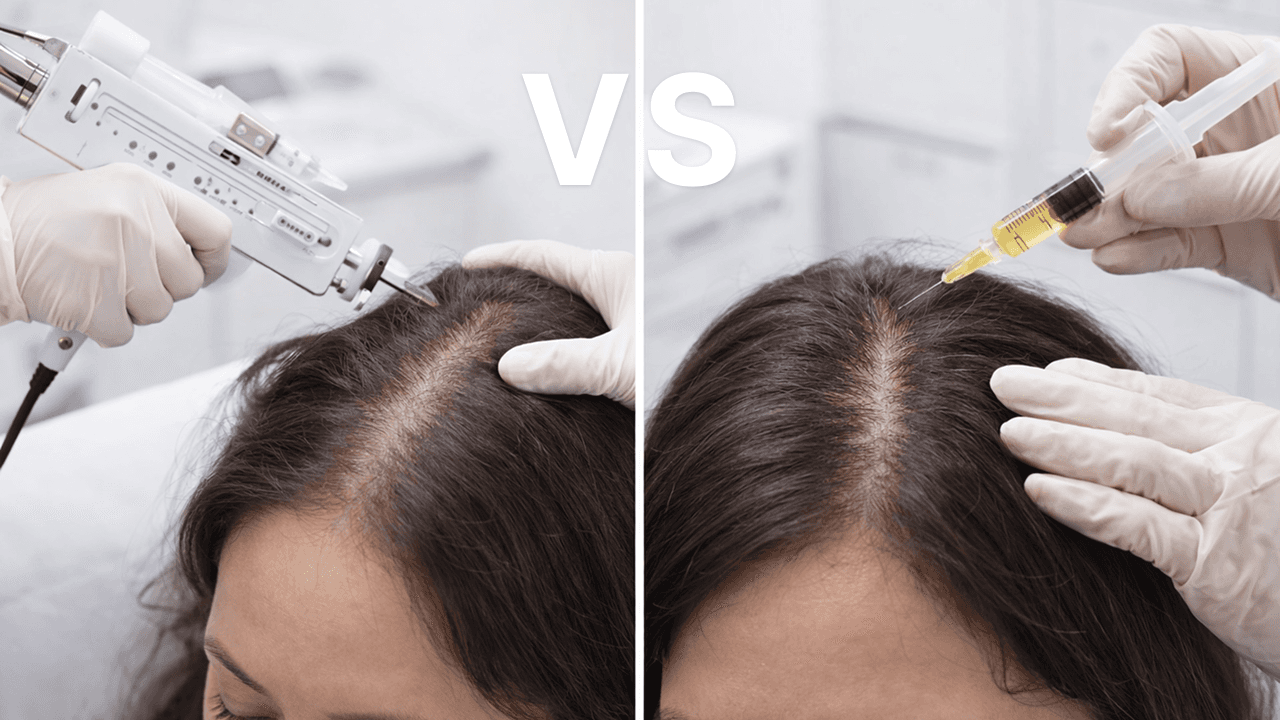
Regenerative treatments (PRP, stem cell therapy)AS -Clinic offers state-of-the-art regenerative treatments:
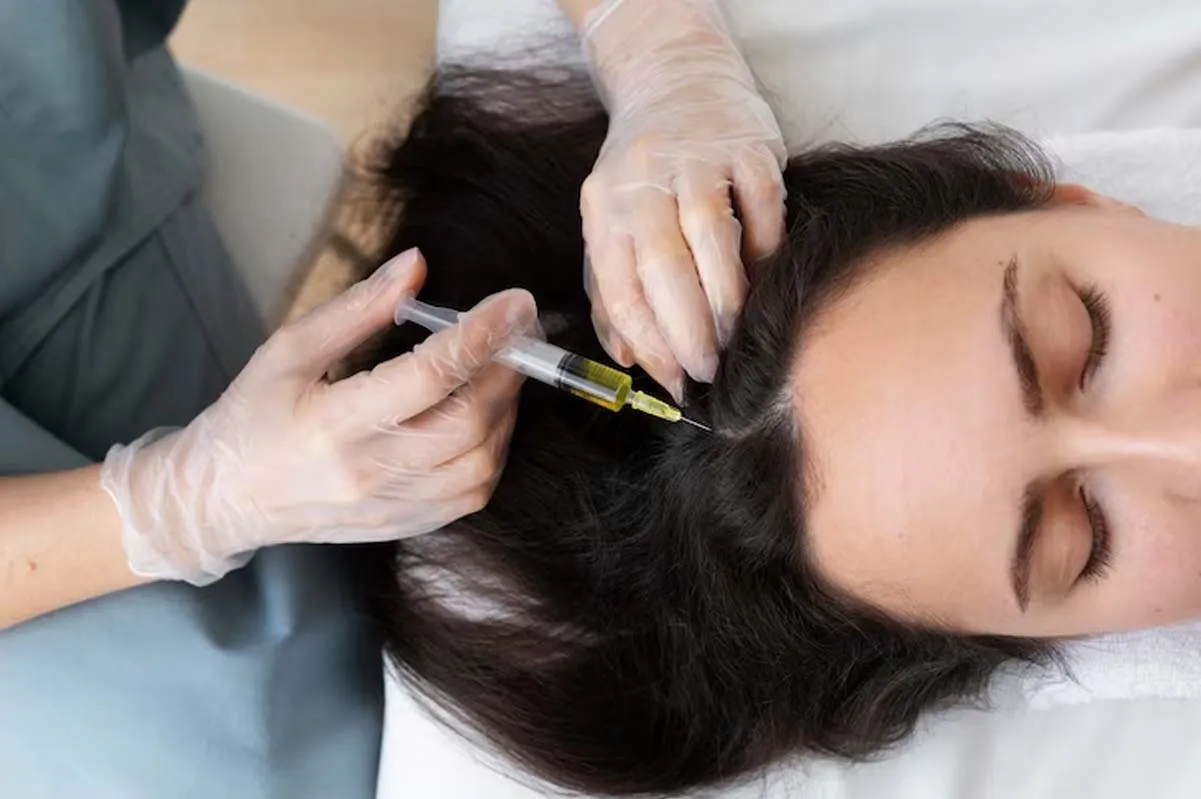
PRP therapy (Platelet-Rich Plasma)
In this treatment, blood is drawn from the patient, platelet-rich plasma is extracted, and injected into the scalp. The growth factors it contains promote blood circulation and regeneration of the hair follicles.
Advantages of PRP therapy | Results |
|---|---|
The body's own process without side effects | Hair thickening in 70-80% of patients |
Short treatment duration (approx. 60 minutes) | First results after 2-3 months |
Outpatient procedure | Improving hair quality |
Stem cell therapy
Stem cell therapy is an innovative procedure that uses the body's own stem cells to regenerate hair follicles. This treatment is particularly suitable for patients with advanced hair loss.
Hair transplantation as a permanent solutionFor advanced hair loss, a hair transplant may be the best solution. The AS Clinic uses state-of-the-art techniques:
FUE method (Follicular Unit Extraction): Individual hair follicles are extracted and transplanted into the bald areas.
DHI method (Direct Hair Implantation): Precise implantation of hair follicles using special instruments
Stem cell-assisted hair transplantation for improved growth ratesImportant: Smokers must take special precautions before undergoing a hair transplant. Ideally, smoking should be avoided for at least two weeks before and four weeks after the procedure to optimize blood circulation and thus the growth rate.
Hair transplantation at the AS ClinicAS -Clinic specializes in the treatment of smoking-related hair loss and offers tailored solutions for men and women:
State-of-the-art techniques (FUE, DHI, stem cell treatment)Our clinic uses only the most advanced hair transplantation methods, which are minimally invasive and guarantee natural results.
Individual consultation and tailored treatment plansEach patient receives an individual treatment plan tailored to their specific situation. Particular attention is paid to the special needs of smokers and ex-smokers.
Procedure of a hair transplant
Detailed consultation and analysis : Determination of the hair loss type and the appropriate treatment method.
Hairline planning : Natural design of the hairline taking into account age, face shape and personal wishes.
Hair follicle extraction : Painless extraction of individual follicles from the donor area
Preparation of the hair follicles : Careful preparation under the microscope
Implantation : Precise placement of the hair follicles into the prepared recipient channels.
Aftercare : Comprehensive post-operative care for optimal results
Results and prospects for successThe success rate of hair transplants at the AS Clinic is over 95%. Initial results are visible after 3-4 months, with the final result appearing after approximately 12 months. Hair growth may be slightly lower in smokers, which is why we offer special aftercare programs to ensure optimal results.
Prevention: How to protect your hair from the effects of smokingIn addition to treatment, prevention is an important aspect in dealing with smoking-related hair loss:
Strategies for quitting smokingAS -Clinic supports you in quitting smoking with:
Behavioral therapy approaches
Nicotine replacement therapy
Medication support
Acupuncture and other alternative methods
Supportive measures for healthy hair growthEven while smoking, you can take steps to improve your hair health:
Regular scalp massages to promote blood circulation
Avoiding additional stress on the hair (heat, harsh chemicals)
Gentle hair care with mild products
Sufficient sleep and stress reduction
Nutrition tips for male and female smokersA balanced diet can partially compensate for the negative effects of smoking on hair:
nutrient | function | Food sources |
|---|---|---|
Biotin | Strengthens the hair structure | Eggs, nuts, rolled oats |
zinc | Supports hair growth | Pumpkin seeds, oysters, beef |
iron | Improves oxygen supply | Red meat, spinach, legumes |
Vitamin C | Neutralizes free radicals | Citrus fruits, bell peppers, broccoli |
Omega-3 fatty acids | Reduce inflammation | Fatty fish, flaxseeds, walnuts |
Care instructions for damaged hairIf your hair is already damaged by smoking, the following care measures can help:
Use of repairing hair masks with keratin or argan oil
Regularly trim the ends to avoid split ends.
Avoid hot hairdryers and styling tools
Using hair oils to protect the hair structure
Testimonials and case studiesAt the AS Clinic, we have successfully treated numerous patients with smoking-related hair loss. Here are some case studies:
Case 1: Michael, 38 years old, heavy smoker (25 cigarettes/day)Michael came to us with advanced hair loss in the area of his receding hairline and part. After a combined therapy of smoking cessation, PRP treatment and targeted FUE hair transplantation, a significant improvement in his hair situation was achieved.
Case 2: Julia, 42 years old, smoker for 20 years (15 cigarettes/day)Julia suffered from diffuse hair loss and a visibly widened center part. Through a combination of quitting smoking, medication with minoxidil, and regular PRP treatments, her hair density was significantly improved.
Case 3: Thomas, 29 years old, ex-smoker (quitted 1 year ago)Despite quitting smoking, Thomas continued to struggle with hair loss. Targeted nutritional therapy and a small FUE hair transplant in the receding hairline area led to a natural and lasting result.
Conclusion and contact information for the AS ClinicThe link between smoking and hair loss is well-established scientifically. The effects differ significantly between men and women, which is due to gender-specific hormonal and genetic factors. The good news: quitting smoking and targeted treatments can stop hair loss and in many cases even reverse it. AS-Clinic offers comprehensive support – from diagnosis and smoking cessation to state-of-the-art treatment methods.
Summary of key findings
Smoking leads to hair loss through various mechanisms, including reduced blood flow, oxidative stress, and hormonal changes.
In men, smoking particularly exacerbates androgenetic alopecia with the typical pattern of receding hairline and baldness.
In women, smoking is more likely to lead to diffuse hair loss and a reduction in hair density.
The severity of hair loss correlates with the duration of smoking and the number of cigarettes smoked daily.
A combination of smoking cessation and targeted treatments offers the best chances of success.
Emphasis on the importance of quitting smoking for hair healthThe most important step to improving your hair health is quitting smoking. Just a few weeks after your last cigarette, blood circulation to your scalp can improve and hair growth can normalize.
Contact information and consultation services of the AS-ClinicAS -Clinic specializes in treating smoking-related hair loss. Schedule a consultation today to learn about your individual treatment options.