Micro FUE: The innovative hair transplantation method
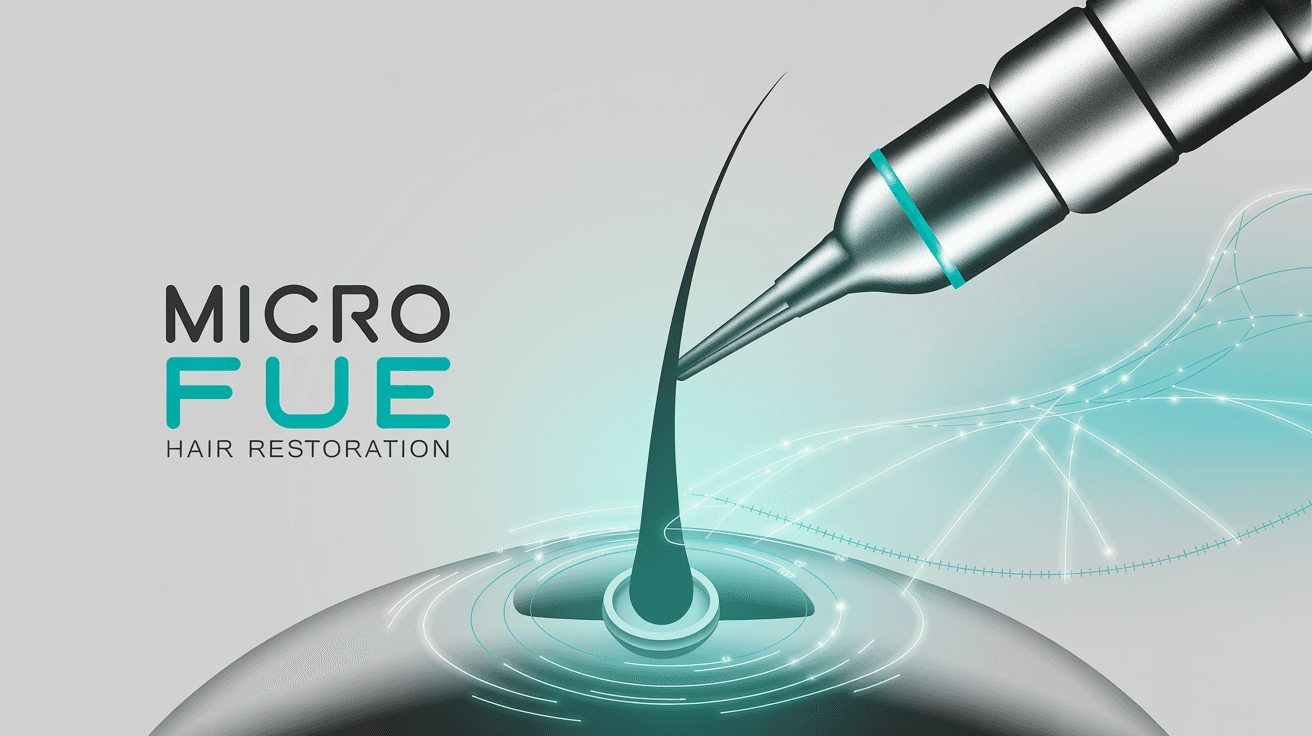
Micro FUE (Follicular Unit Extraction) hair transplantation is a revolutionary microsurgical technique that offers exceptionally natural-looking results for hair loss with minimal intervention. An advancement of the classic FUE method, it utilizes ultra-fine instruments for maximum precision and follicle survival rates. This article provides a comprehensive overview of the technical aspects, clinical procedure, and evidence-based benefits of this state-of-the-art treatment method, which is increasingly becoming the gold standard for hair transplantation in Berlin and throughout Germany.

The most important information at a glance

Micro FUE is a highly precise advancement of classic hair transplantation using ultra-fine instruments (0.5-0.7 mm)
Micro FUE reduces the transection rate by up to 70%, leading to significantly better results.
Scientific studies show a survival rate of up to 95-98% for transplanted follicles.
The technique allows for virtually invisible scars and a fast healing time of only 3-5 days.
In Berlin, specialized centers with state-of-the-art equipment are available for this innovative treatment method.
The development history of the Micro FUE technique
The evolution of hair transplantation techniques has made remarkable progress in recent decades:
Period | technology | Instrument size | Key features |
|---|---|---|---|
1950s-1990s | FUT (strip method) | Scalpel (linear) | Removal of entire strips of skin, visible scars |
2000s-2010s | Classic FUE | 0.8-1.2 mm | Individual follicle extraction, reduced scarring |
From the 2010s onwards | Micro FUE | 0.5-0.7 mm | Micro-instruments, minimal tissue damage, maximum hair yield |
Current | Robot-assisted Micro FUE | 0.5-0.6 mm | AI-assisted extraction, highest precision |
This continuous miniaturization of instruments has led to a significant improvement in patient outcomes. According to a study published in the International Journal of Trichology, the transection rate of follicles could be reduced by up to 70% using Micro FUE. Modern Micro FUE technology represents the current pinnacle of this development and combines scientific findings from trichology (hair healing), microsurgery, and regenerative medicine.
What is Micro FUE?
Micro FUE (Follicular Unit Extraction) represents a highly precise microsurgical advancement of the classic FUE hair transplantation technique. In this innovative method, individual follicular units are extracted and implanted using ultra-fine, specialized instruments under high-resolution magnification.

Technical principles of Micro FUE
The fundamental features of this technology include:
Microscopic precision : Use of high-magnification magnifying systems (5-10x) for maximum accuracy
Ultra-fine extraction instruments : Specialized micropunches with a diameter of 0.5-0.7 mm (approx. 40% smaller than in conventional FUE)
Atraumatic harvesting technique : minimizing perifollicular tissue damage
Uniform grafts : Careful extraction of intact follicular units with 1-4 hair shafts.
Biomechanically optimized implantation technique : Maximizing the survival rate of the transplants
Anatomical and physiological basics
Micro FUE incorporates the latest scientific findings on hair follicle biology:
Follicle component | Significance for transplantation | Considerations for Micro FUE |
|---|---|---|
Dermal papilla | Essential growth center of the follicle | Complete extraction without damage |
Bulge region | Stem cell reservoir for follicle regeneration | Precise extraction with preservation of the stem cells |
sebaceous glands | Important for natural hair care | Preservation of perifollicular structures |
Arrector pili muscle | Responsible for hair lift | Gentle extraction for natural function |
Clinically relevant differences compared to classic FUE
Micro FUE is characterized by several crucial technological improvements:
Reduced transection rate : The extremely fine instruments reduce the frequency of follicle damage during extraction from typically 10-15% with conventional FUE to less than 5% with Micro FUE.
Increased graft survival rate : Scientific studies demonstrate an improved survival rate of transplanted follicles of up to 95-98% compared to 85-90% with classic FUE, as research results from the European Society of Hair Restoration Surgery show.
Improved follicle density : The micro-precise placement allows for a higher transplantation density of up to 50-60 follicular units/cm² compared to 35-45 units/cm² with conventional techniques.
Minimized scarring : The pinpoint extraction sites with a diameter of only 0.5-0.7 mm leave virtually invisible micro-scars, even with closely shaved hair.
These technological advances make Micro FUE the method of choice for demanding hair transplants, especially in aesthetically sensitive areas such as the frontal hairline, the temples, or when treating fine hair that is more difficult to manage with conventional methods.
Procedure of a Micro FUE treatment
Micro FUE hair transplantation follows a scientifically optimized protocol that proceeds in several precisely defined phases. In accordance with the guidelines of the International Society of Hair Restoration Surgery, specialized centers in Berlin and the surrounding area rely on standardized procedures that guarantee the highest quality and reproducible results.
Preoperative phase: Trichological diagnostics and treatment planning
The success of a Micro FUE transplant begins even before the actual procedure:
Comprehensive trichological diagnostics:
Detailed hair and scalp analysis using Trichoscan (digital hair density measurement)
Determination of the degree of miniaturization of the follicles
Evaluation of hair shaft thickness and quality
Diagnosis of hair loss type according to the Hamilton-Norwood (men) or Ludwig-Savin (women) scale
Computer-aided treatment planning:
3D simulation of the expected results
Establishing a natural hairline while considering aesthetic principles
Calculation of the required number of grafts based on hair density and recipient zone size
Determining the optimal hair direction and growth angle for maximum naturalness
Intraoperative phase: The Micro FUE process
The actual treatment is divided into several highly specialized sub-steps:
1. Preparation and anesthesia
Documentation of the initial state using high-definition photography
Marking of the planned hairline and recipient areas
Gentle shaving of the donor area (optionally also possible with "Long Hair FUE")
Painless local anesthesia through advanced tumescent technique
Application of a PRP (Platelet Rich Plasma) concentrate to optimize growth factors (optional)
2. Extraction of the follicular units
The follicles are extracted according to a precise microsurgical protocol:
phase | Technology | instruments | Quality assurance |
|---|---|---|---|
Punch incision | Micromotor-assisted or manual precision incision | Titanium/sapphire micropunches (0.5-0.7 mm) | Penetration depth control for minimum transection rate |
Follicle extraction | Atraumatic microforceps extraction | Special Jeweler's Micro Tweezers | Stereomicroscopic control of follicle integrity |
Temporary preservation | Hypothermic nutrient solution | Chilled Graft Storage Solution | Constant temperature monitoring (4-8°C) |
During extraction, particular attention is paid to the following parameters:
Preservation of perifollicular tissue for optimal survival rate
Minimizing extraction time (< 2 seconds per follicle) to avoid dehydration
Rotation-free extraction to avoid torsional damage
3. Microscopic graft preparation and classification
The extracted follicular units are carefully processed by specialized technicians under stereomicroscopes (10-25x magnification):
Graft typing according to follicle count:
Single Hair Grafts (1 hair shaft): Ideal for hairline and temple area
Double Hair Grafts (2 hair shafts): For transition areas
Triple Hair Grafts (3 hair shafts): For central thickening
Quadruple Hair Grafts (4+ hair shafts): For maximum density at the crown
Quality control:
Removal of excess tissue while preserving the follicular protective tissue.
Sorted by hair shaft thickness for natural distribution
Continuous hydration in a special nutrient solution with growth factors
4. Recipient zone preparation and graft implantation
The final and decisive step for an aesthetically pleasing result:
Microscopically precise stab incision:
Use of implantation needles with a diameter of 0.5-0.9 mm (depending on graft size)
Consideration of natural growth angles (40-45° frontal area, 60-75° crown area)
Adherence to specific implantation densities for natural results
Strategic Graft Placement:
Single-hair grafts for the front hairline (natural "soft look")
Multi-hair grafts for central compaction (maximum volume)
Varying implantation depth for optimal blood flow
Postoperative phase and care
After completion of the transplant:
Application of a cooling, anti-inflammatory solution
Photographic documentation of the immediate postoperative condition
Comprehensive aftercare consultation and handover of a personalized care set
The entire procedure takes between 4 and 8 hours, depending on the extent of the transplant, and is usually performed on an outpatient basis. For larger transplants (>3,000 grafts), the treatment may be split over two consecutive days to ensure the quality of each transplanted follicle and to minimize out-of-body time.
Advantages over traditional methods
Micro FUE technology offers significant medical and aesthetic advantages over conventional hair transplant methods, as demonstrated by scientific studies. In particular, compared to FUT (strip method) and the classic FUE technique, Micro FUE shows superior results in several clinically relevant parameters.
Evidence-based comparative analysis of transplantation methods
The following comparative analysis is based on current scientific findings and clinical data:
parameter | Micro FUE | Classic FUE | FUT (strip method) | Clinical relevance |
|---|---|---|---|---|
Instrument diameter | 0.5-0.7 mm | 0.8-1.2 mm | Scalpel (linear) | Smaller instruments = less tissue trauma |
Scarring | Microscopically small dot scars | Visible dot scars | Linear scar (10-30 cm) | Aesthetic result, possibility of wearing short hair |
Transaction rate | <5% | 8-15% | 5-10% | Direct influence on follicle survival rate |
Extraction time per follicle | 1.5-2 seconds | 3-4 sec. | N/A (en bloc) | Minimizing dehydration time = increased vitality |
Healing time donor area | 3-5 days | 5-7 days | 14-21 days | Faster return to everyday activities |
Maximum number of grafts per session | Up to 3,500 | Up to 3,000 | Up to 4,000 | Treatment efficiency and scope |
Graft survival rate | 95-98% | 85-90% | 90-95% | Long-term hair density and cost-benefit ratio |
Postoperative pain | Minimal (VAS 1-2/10) | Light (VAS 3-4/10) | Moderate (VAS 5-7/10) | Patient comfort and recovery |
Biomechanical and physiological advantages
The superior results of Micro FUE are based on several key factors:
Minimizing tissue trauma:
Reduced mechanical damage to the perifollicular tissue
Maintaining the microvascular supply to the hair follicles
Minimizing crushing and shear forces during extraction
Optimized microcirculation:
Improved revascularization through reduced implantation trauma
Faster regeneration of capillaries around transplanted follicles
Improved nutrient supply during the critical early growth phase
Increased biological vitality of the grafts:
Reduction of ischemic time through optimized harvesting and implantation techniques
Preservation of follicular stem cells in the bulge region
Preservation of the epidermal stem cell niche for better long-term outcomes
Clinical benefits from the patient's perspective
For patients in Berlin and the surrounding area, Micro FUE offers significant practical advantages:
Outpatient procedure with minimal recovery time:
No hospital admission necessary
Ability to work is usually restored after 2-3 days.
Sporting activities are possible again after 7-10 days (vs. 14-21 days for FUT)
Extended application possibilities:
Ideal for smaller, precise transplants (e.g., eyebrows, beard)
Ideally suited for the densification of existing grafts
Especially beneficial for thin, fine, or grey hair
Improved psychosocial aspects:
No visible linear scars with short hairstyles
More natural results, even upon close inspection.
Increased self-esteem through aesthetically convincing results
Micro FUE has become established as the method of choice for quality-conscious patients, particularly in specialized centers such as the AS Clinic in Berlin, who place the highest demands on the aesthetic result of their hair transplant.
Ideal candidates for Micro FUE
The American Hair Loss Association has published clear guidelines on which patients can benefit from modern hair transplant techniques such as Micro FUE. According to the Journal of Clinical and Diagnostic Research, factors such as hair type, degree of hair loss, and realistic personal expectations play a crucial role. The German Medical Journal (Deutsches Ärzteblatt) emphasizes the importance of careful patient selection for optimal long-term results.
Aftercare and healing process
Optimal aftercare following a Micro FUE hair transplant is crucial for the long-term success of the procedure. A study in the Journal of Cutaneous and Aesthetic Surgery demonstrates that professional aftercare can increase the survival rate of transplanted follicles by up to 15%. Specialized centers in Berlin implement a scientifically sound aftercare program based on the latest trichological findings and taking into account the biological growth phases of the hair follicles.
Chronology of the healing and growth process
The postoperative course after a Micro FUE transplant follows a biologically determined pattern that can be divided into distinct phases:
phase | Period | Biological processes | Clinical appearance | Recommended measures |
|---|---|---|---|---|
Acute inflammatory phase | Days 1-3 | Initial inflammatory response, beginning of revascularization | Mild swelling, redness, serous-bloody exudation | Anti-inflammatory cooling, elevating the head (30°), avoiding nicotine/alcohol |
crust formation phase | Days 3-10 | Epithelialization of the microlesions, formation of fibrin exudate | Formation of small crusts around transplanted follicles | Gentle washing with pH-neutral special shampoo, no mechanical crust removal. |
Anagen effluvium (shock loss) | Weeks 2-4 | Temporary transition to telogen phase due to transplantation trauma | Loss of a large proportion of the transplanted hair shafts | Continuation of scalp care, emotional support of the patient |
Latency phase (telogen) | Months 2-3 | Follicle regeneration and adaptation to a new environment | Clinically unremarkable phase with minimal visible changes | Continued scalp care, start with micronutrient supplementation |
Early anagen phase | Months 3-6 | Transition of the follicles to the growth phase (anagen) | The beginning of new hair growth; fine hairs become visible. | Regular trichological check-ups, possibly PRP therapy to stimulate growth. |
Middle anagen phase | Months 6-9 | Continuous hair shaft growth and thickening | Increased hair density, improved texture | Normal hair styling possible, protection against UV radiation |
Late anagen phase (maturation) | Months 9-15 | Complete maturation of the hair follicles, pigmentation and thickening. | The final cosmetic result will be visible. | Long-term maintenance care, minor touch-ups if necessary. |
Stabilization phase | From month 15 | Establishment of the normal hair cycle | A lasting, stable end result | Annual trichological checks recommended |
1. Immediate postoperative phase (days 1-7):
The first few days after transplantation are critical for the growth of the transplanted follicles and require special attention:
Sleep position and activity management:
Elevated head position (30-45° angle) for at least 3 nights
Avoid lying on your stomach for 14 days
Pause cardiovascular training (72 hours)
Avoid heavy lifting (>5kg) for 7 days
Avoid excessive sweating for 10 days
Medication support:
Antibiotic prophylaxis according to an individual schedule
Anti-inflammatory treatment if needed
Specific analgesics without effects on microcirculation
Avoidance of ASA, NSAIDs and other blood-thinning substances
Scalp cleansing and care: Washing usually begins 48 hours after the procedure and follows a precise protocol:
Preparatory hydration with lukewarm water (max. 37°C)
Application of a pH-neutral, special postoperative shampoo
Apply gently with your fingertips, no circular motions.
Gentle rinsing with low water pressure
Dry by gently patting (do not rub)
The washing frequency increases progressively:
Days 2-3: Once daily
Days 4-7: Twice daily
From day 8: Normal washing possible
2. Medium-term follow-up (weeks 2-8):
In this phase, the focus is on supporting the hair follicles during the inevitable "shock loss" and the subsequent latency phase:
Management of shock loss:
Clarification about the normality of this process
Avoiding anxiety reactions during hair loss
Gentle scalp massages to promote blood circulation
Progressive reintegration into sporting activities
Nutritional support:
Protein-rich diet (1.2-1.5g/kg body weight)
Biotin supplementation (5000 mcg/day)
Zinc (15-30mg/day) and iron (in case of proven deficiency)
Antioxidants (vitamin E, selenium) to reduce oxidative stress
Omega-3 fatty acids (1-2g/day) to support follicle health
3. Long-term support (from month 3):
Long-term follow-up care aims to optimize the growth phase and ensure lasting results:
Adjuvant therapies for growth optimization:
PRP (Platelet Rich Plasma) treatments: 3-4 sessions at intervals of 4-6 weeks
Low-level laser therapy to stimulate mitochondrial activity
Topical minoxidil application (as indicated)
Microneedle therapy for collagen stimulation
Trichological monitoring:
Regular progress checks using standardized photographic documentation
Digital hair density measurements for quantitative success monitoring
Analysis of hair shaft quality and thickness
Early detection and management of potential complications
Special cases and individual adjustments
According to the American Academy of Dermatology, aftercare should always be individualized and take the following specific factors into account:
Combination therapies for progressive hair loss:
Finasteride/dutasteride supportive therapy (after strict indication)
Mesotherapy with growth factors
Stem cell-based treatment approaches (experimental)
Adaptation for high-risk patients:
Intensified follow-up care for smokers
Special protocols for patients with diabetes mellitus
Modified care instructions for seborrheic dermatitis or psoriasis
Scientifically based aftercare is an integral part of the treatment concept and contributes significantly to the overall success of micro FUE hair transplantation. A meta-analysis published in the Journal of Clinical and Diagnostic Research (F(T)_PF1(VKU_AJ)_PFA(MJ)_PN(KM).pdf) confirms that structured aftercare protocols can improve the success rate of transplantation by up to 30%. By consistently adhering to these protocols, patients in Berlin and the surrounding area can benefit from optimal, long-term stable results.
Possible risks and complications
Although micro FUE hair transplantation is considered a minimally invasive procedure with a high degree of safety, potential complications and risks must be taken into account. A comprehensive risk evaluation published in the International Journal of Trichology shows that modern transplant centers employ strict quality assurance protocols to minimize these risks and manage them effectively if necessary.
Risk stratification and incidence rates
The scientific literature documents the following complication rates for Micro FUE:
Complication type | Incidence rate of Micro FUE | Incidence rate of conventional FUE | Risk factors | Preventive measures |
|---|---|---|---|---|
Transient inflammation | 95-100% (mild) | 95-100% (moderate) | Sensitive skin | Anti-inflammatory cooling |
Persistent swelling | 2-5% | 5-10% | Low BMI, fluid retention | Head elevation, lymphatic drainage |
Folliculitis | 1.5-3% | 3-7% | Seborrheic dermatitis, immunosuppression | Antibiotic prophylaxis, sterile technique |
Infections | <0.5% | 1-2% | Diabetes, smoking | Perioperative antibiotic administration, antiseptic measures |
Cyst formation | 1-2% | 3-5% | Deep-lying implants | Optimal implantation depth |
Hematoma formation | <1% | 1-3% | coagulation disorders, anticoagulation | Preoperative medication adjustment |
Neurosensory disorders | 2-5% (temporary) | 5-10% (temporary) | Close anatomical location near nerves | Precise surgical technique |
Temporary postoperative phenomena
The following phenomena are normal side effects of the healing process and not actual complications:
Perifollicular erythema and edema (redness and swelling):
Origin: Inflammatory reaction to the surgical trauma
Duration: 3-7 days
Management: Cooling, non-steroidal topical anti-inflammatory drugs, head elevation
Special feature: In some patients, a "forehead edema progression" may occur, in which the swelling migrates towards the eye area in the first 48 hours.
Crust formation around transplanted follicles:
Origin: Physiological wound healing process with fibrin exudation
Duration: 7-10 days
Management: Gentle washing with special shampoos, no mechanical crust removal.
Special feature: The scabs protect the grafts and fall off on their own with proper care.
Effluvium (shock loss):
Origin: Traumatic transition of the follicles into the telogen phase
Duration: Onset 2-4 weeks post-op, resumption of growth from month 3-4.
Management: Education about the normality of this process, trichological monitoring
Special feature: Affects 90-95% of transplanted hairs, is not a sign of failure
Real complications and their management
1. Microbiological complications:
Bacterial folliculitis:
Symptoms: Multiple small pustules around the transplanted follicles
Etiology: Mostly Staphylococcus aureus or epidermidis
Management: Topical antibiotics (fusidic acid, mupirocin); if spread, systemic antibiotic therapy.
Prevention: Stringent aseptic techniques, preoperative scalp disinfection
Deeper infections:
Symptoms: Progressive redness, swelling, pain, possibly fever.
Etiology: Penetration of germs into deeper tissue layers
Management: Systemic antibiotics (cephalosporins or quinolones), possibly surgical intervention
Prevention: Perioperative antibiotic prophylaxis in high-risk patients
2. Aesthetic complications:
Suboptimal hair density:
Cause: Low graft survival rate or unrealistic patient expectations
Management: Complementary transplantation, adjuvant therapies (PRP, minoxidil)
Prevention: Realistic education, optimal graft handling techniques
Unnatural appearance:
Cause: Incorrect hairline design, incorrect implantation angle
Management: Corrective transplantation with a special focus on aesthetic planning
Prevention: Computer-assisted hairline planning, consideration of individual facial proportions
Cobblestone surface:
Cause: Implantation too shallow or placement of grafts too close together
Management: Often spontaneous remission, alternatively superficial dermabrasion
Prevention: Correct implantation techniques and depths
3. Rare but serious complications:
Extensive necrosis:
Incidence: Extremely rare with Micro FUE (<0.01%)
Cause: Compromised microcirculation due to overly dense transplantation
Management: Immediate surgical intervention, hyperbaric oxygen therapy
Prevention: Respecting physiological density limits (max. 50-60 FU/cm²)
Hypertrophic scarring and keloids:
Incidence: Rare (<0.5%), genetic predisposition required
Management: Intralesional corticosteroid injections, silicone dressings
Prevention: Careful screening of the patient's history
Risk prevention and quality assurance in modern hair clinics
The European Hair Research Society Journal recommends a multi-stage prevention system, which is being implemented in leading Berlin hair clinics:
Preoperative phase:
Comprehensive medical history to identify risk factors
Trichological assessment and photo documentation
Patient education with realistic expectations
Preoperative laboratory diagnostics in high-risk patients
Intraoperative phase:
Strict asepsis and sterile working techniques
Continuous monitoring of extraction and implantation quality
Limitation of the out-of-body time of the grafts
Adequate implant density, taking local blood flow into account.
Postoperative phase:
Standardized follow-up protocols
Close monitoring of progress (day 1, 7, 14, month 1, 3, 6, 12)
Early intervention at the first signs of complications
Comprehensive education and professional support of patients in all phases of treatment not only minimize objective complication rates, but also subjective patient satisfaction with the treatment outcome.
Costs and pricing factors
For many patients, investing in a micro FUE hair transplant represents a significant financial commitment. A recent market analysis by the German Society for Aesthetic Plastic Surgery reveals transparent pricing models in Berlin clinics, based on various factors and explained in detail during an individual consultation.
Price structure analysis and calculation principles
The cost structure of a Micro FUE treatment follows various calculation models:
Calculation model | Description | Advantages | Disadvantages | Typical application |
|---|---|---|---|---|
Price per graft | Costs are calculated per transplanted follicular unit. | Transparent calculation, precise billing | High overall costs for large quantities | Small to medium transplants |
Zone flat rate | Fixed price for defined treatment areas | Cost certainty regardless of the exact number of grafts | May be uneconomical in small zones. | Receding hairline, defined areas |
flat-rate area allowance | Calculation based on the area in cm² to be treated | Easy understanding for patients | Does not take hair density into account. | Large contiguous areas |
Total price | Flat rate for the entire treatment | Maximum cost certainty | Less flexibility when making changes | Extensive transplants |
Detailed cost overview according to the scope of treatment
According to a survey by the portal for medical tourism and health travel, the following prices reflect the current market in Berlin and the surrounding area, with a focus on a balanced price-performance ratio and the highest quality:
Scope of treatment | Number of grafts | Average price range in Berlin | Comparison prices nationwide | Included services |
|---|---|---|---|---|
Small intervention | 500-1,000 | €2,500 – €4,000 | €2,000 – €4,500 | Basic care, simple aftercare |
Medium scope | 1,000-2,000 | €4,000 – €7,000 | €3,500 – €8,000 | Extended aftercare, PRP treatment |
Extensive treatment | 2,000-3,000 | €7,000 – €10,000 | €6,000 – €12,000 | Premium aftercare, multiple PRP sessions |
Maximum transplantation | 3,000-4,500 | €10,000 – €15,000 | €9,000 – €16,000 | All-inclusive package with long-term care |
Price-value matrix: Influencing factors
The cost of a Micro FUE hair transplant is determined by various qualitative and quantitative factors:
1. Operational factors:
Number of grafts: Primary cost factor, direct correlation to the extent of treatment
Technical complexity: Special cases (reconstruction after scarring, unusual hair angles, afro-textured hair)
Operational duration: Longer procedures require more personnel and resources.
Anesthesia procedure: Local vs. light sedation (additional costs for anesthesia team)
2. Qualitative factors:
Surgeon's experience and expertise:
Leading specialists with many years of experience
Demonstrable success and documented results, as recommended in the specialist literature of the International Society of Hair Restoration Surgery
Degree of specialization in specific techniques or patient groups
Hospital equipment and technology:
State-of-the-art microscopic visualization systems
High-precision extraction and implantation instruments
Advanced preservation technologies for grafts
Digital treatment planning and documentation
Scope of aftercare:
Standard aftercare vs. premium aftercare package
Number of included check-up appointments
Additional therapies (PRP, laser, supplementation)
3. Location-specific factors:
Regional price index: In Berlin, typically mid to upper price segment
Hospital infrastructure: Central location, high-quality facilities, comfort factors
Regulatory requirements: Compliance with the highest German quality and safety standards
Financing options and cost management
The German Medical Association recommends that patients pay attention to the following financing options when choosing a clinic:
Installment payment models: Flexible payment plans over 6-36 months
Medical financing: Cooperation with specialized financing providers at favorable conditions.
Combination packages: Cost advantages through combination with other treatments
Early booking discounts: Discounts for long-term scheduling
Cost coverage by insurance companies
The reimbursement of costs by insurance providers must be considered in a differentiated manner:
Statutory health insurance:
Generally, no costs are covered for aesthetically motivated procedures.
Possible exceptions in case of medical indication (e.g. after accidents, burns, psychiatrically relevant stress)
Required: Detailed medical reports and prior authorization
Private health insurance:
Depending on the individual insurance tariff and scope
Partial cost coverage with appropriate supplementary insurance.
Prior written cost approval is absolutely necessary.
Cost-benefit analysis from the patient's perspective
When deciding on Micro FUE treatment, patients should consider the following factors in addition to the direct financial aspects:
Long-term value retention: Permanent solution vs. temporary alternatives (toupees, hairpieces)
Psychosocial effects: Improved quality of life, increased self-esteem, career opportunities
Savings: Elimination of ongoing expenses for non-permanent solutions
Opportunity costs: Time spent on aftercare and healing phase
According to a study by the German Association of Hospital Physicians, every reputable hair clinic should place particular emphasis on transparent cost information. As stipulated by the Patient Rights Act, every patient should receive a detailed, individually tailored cost estimate during the comprehensive initial consultation, encompassing all services and providing a sound basis for decision-making.
To avoid unpleasant surprises, potential patients should always ask for a detailed cost estimate that covers all aspects of the treatment.
Micro FUE as a future-oriented solution for hair loss
Micro FUE hair transplantation has established itself as an extremely effective and gentle method for the permanent treatment of hair loss. Through the use of highly precise instruments and state-of-the-art techniques, it offers patients numerous advantages:
Minimal scarring and rapid healing
Natural-looking results with optimal hair density
Low-pain procedure with short recovery time
Long-term stable and aesthetically pleasing results
According to the Hair Transplant Network, patients in Berlin and the surrounding area have access to top-notch specialist clinics that utilize the latest hair transplant technology. As the European Academy of Dermatology and Venereology also emphasizes, the key to success lies in the careful selection of a qualified clinic with experienced specialists and a comprehensive treatment plan, from the initial consultation to long-term aftercare.
If you are suffering from hair loss and are looking for a permanent solution, the Micro FUE method can help you regain not only your hair, but also your self-confidence. A personalized consultation is the first step on the path to naturally thick hair growth.
Further information
For more comprehensive information on Micro FUE hair transplantation, the following reputable sources may be helpful:
International Society of Hair Restoration Surgery: A worldwide professional society with comprehensive information on modern hair transplantation techniques.
German Society for Hair Medicine: Scientific information on hair diseases and treatment methods
European Hair Research Society: European Research Society for Hair Medicine
American Hair Loss Association: Patient-oriented information on hair loss and treatment options
Talk to your dermatologist about your individual options and seek detailed advice from specialized clinics in Berlin before making a decision.
Conclusion and contact information for the AS Clinic
AS -Clinic offers comprehensive support – from diagnosis and treatment to personalized care recommendations. Our experienced team, led by Ali Reza Simaee, has over 12 years of experience treating hair disorders.
Contact information and consultation services of the AS-Clinic
AS -Clinic is your specialist for all questions concerning gray hair and hair changes. Schedule a consultation today and learn about your individual treatment options.