

 01793902489
  WhatsApp senden
  Anfrage Formular

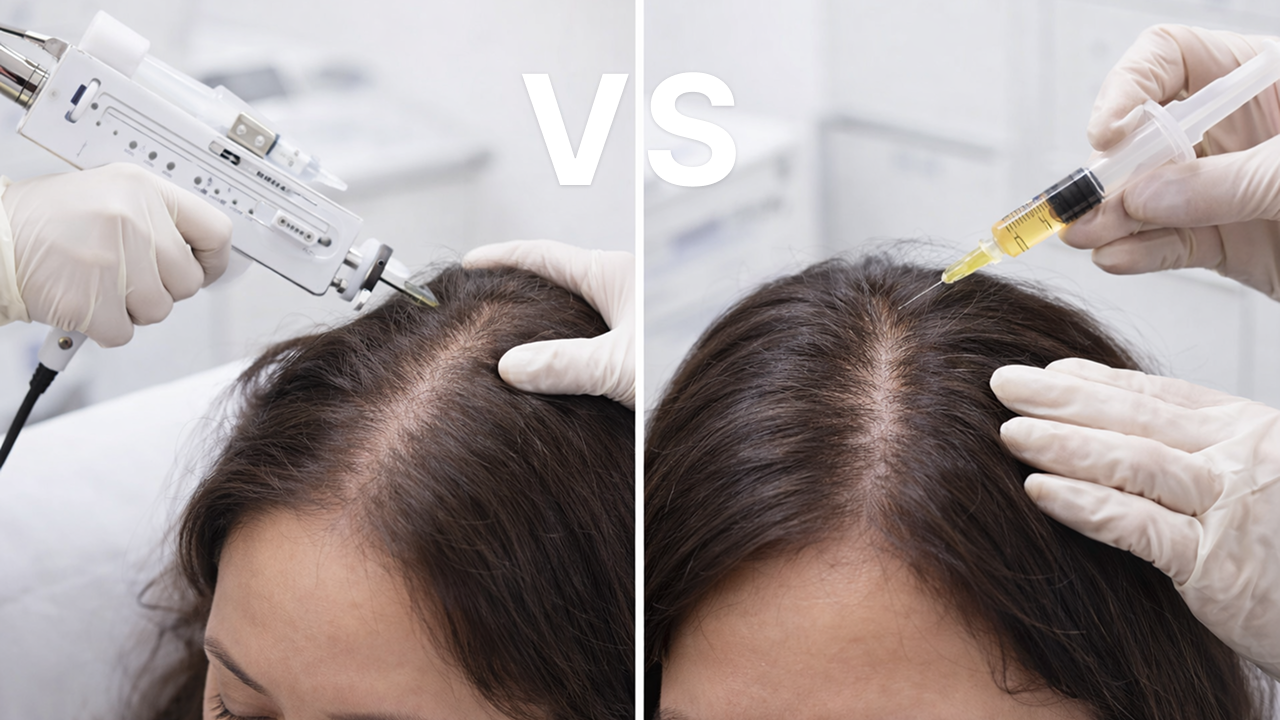
Diffuse hair thinning is one of the most frequent yet misunderstood hair concerns seen in clinical practice. Unlike pattern hair loss, where recession or bald spots are clearly defined, diffuse thinning presents as a gradual, even reduction in hair density across the scalp. Hair may appear flatter, parting lines may widen, and styling becomes increasingly difficult—often without obvious areas of baldness.
At AS Clinic in Berlin, many patients—both local residents and international clients—ask the same question during early research stages:
Mesotherapy or PRP—what actually works better for diffuse hair thinning?
The answer is nuanced and depends on individual biology, accurate diagnosis, and realistic expectations. This article explains the differences from a medical perspective, without exaggeration or marketing claims.
Understanding Diffuse Hair Thinning: Why the Cause Matters
Diffuse hair thinning is not a diagnosis on its own. It is a pattern of hair loss that can result from several underlying conditions, including:
- Telogen effluvium (stress, illness, surgery, postpartum changes)
- Nutritional deficiencies (iron, ferritin, vitamin D, protein)
- Hormonal imbalance (thyroid disorders, PCOS)
- Early-stage androgenetic alopecia
- Chronic inflammatory or autoimmune conditions
Because multiple hair follicles are affected simultaneously, treatment success depends less on the procedure chosen and more on whether the underlying cause has been correctly identified. This is why proper clinical evaluation and, where appropriate, laboratory diagnostics play a central role in treatment planning.
This is often where confusion begins for patients exploring treatment options online.
What Mesotherapy Actually Does (and What It Does Not)
Hair mesotherapy involves injecting a combination of vitamins, amino acids, minerals, and antioxidants directly into the scalp. The exact formulation may vary between clinics and is not universally standardized.
From a medical standpoint, mesotherapy is best understood as a supportive scalp treatment rather than a regenerative therapy.
How Mesotherapy May Help
Mesotherapy may be beneficial by:
- Improving scalp microcirculation
- Delivering nutrients directly to hair follicles
- Supporting follicles weakened by deficiency or metabolic stress
- Reducing excessive shedding in selected patients
Important Limitations to Understand
It is equally important to understand what mesotherapy does not do:
- It does not reverse follicle miniaturization
- It does not genetically alter androgen sensitivity
- It does not independently activate dormant hair follicles
For this reason, mesotherapy tends to be more effective when diffuse thinning is temporary or deficiency-related rather than progressive.
PRP Therapy: A Regenerative Approach to Hair Thinning
PRP (Platelet-Rich Plasma) therapy uses the patient’s own blood to concentrate platelets and growth factors, which are then injected into the scalp under controlled medical conditions.
Unlike mesotherapy, PRP is classified as a biological regenerative treatment.
How PRP Works on Hair Follicles
PRP may support hair growth by:
- Stimulating cellular activity within the hair follicle
- Improving follicular blood supply
- Prolonging the anagen (growth) phase of hair
- Supporting increased hair shaft thickness
In patients with diffuse thinning caused by early androgenetic alopecia or chronic telogen effluvium, PRP targets follicle function rather than scalp nutrition alone.
Mesotherapy vs PRP: A Clinical Comparison
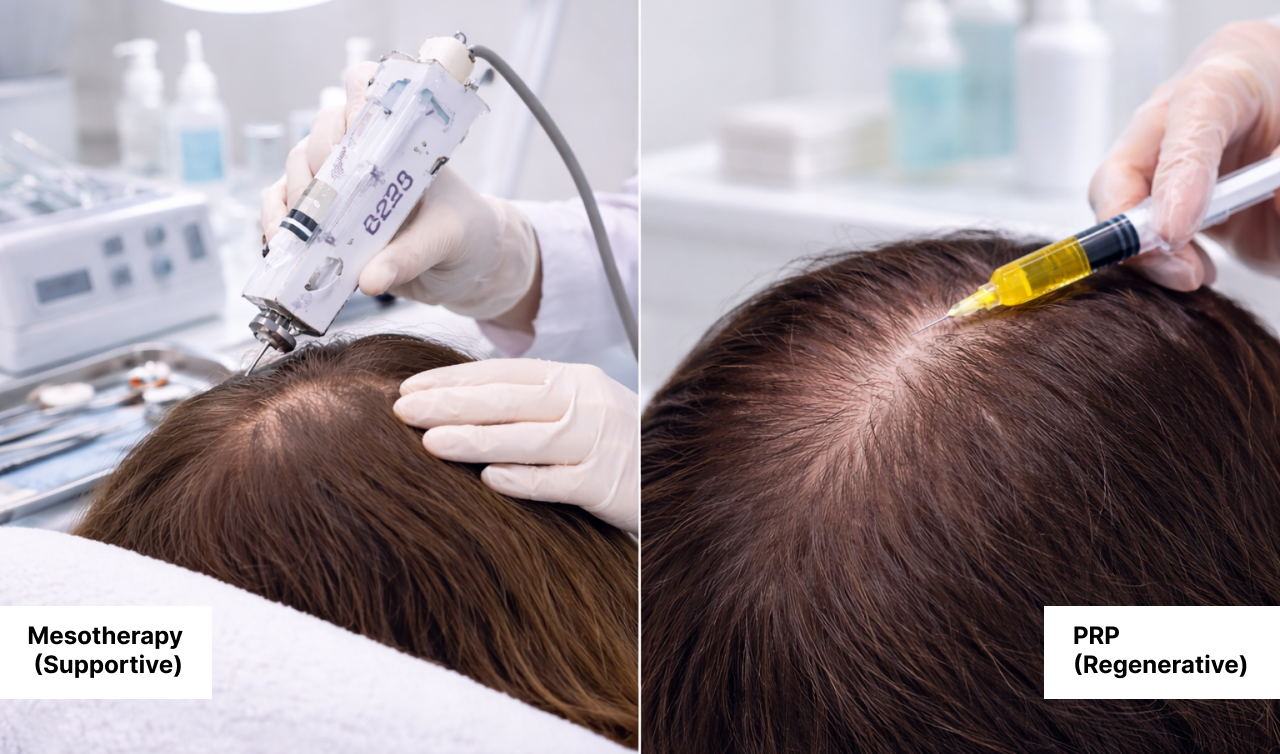
Rather than viewing mesotherapy and PRP as competing treatments, it is more accurate to understand how each fits into different clinical scenarios.
Mesotherapy is typically considered when:
- Hair thinning is recent or stress-related
- Blood tests indicate nutritional deficiencies
- Hair follicles remain structurally healthy
- The primary goal is to reduce shedding and improve hair quality
PRP is often preferred when:
- Diffuse thinning is progressive or long-standing
- Hair shaft diameter has visibly reduced
- Early androgenetic alopecia is suspected
- A regenerative effect on follicle activity is required
Based on current clinical evidence, PRP is generally considered more effective in many cases of diffuse hair thinning involving follicle weakening or miniaturization.
Common Misconceptions Patients Encounter Online
“Mesotherapy and PRP do the same thing”
They do not. Mesotherapy focuses on nutrient delivery and scalp support, while PRP focuses on biological stimulation at the follicular level.
“PRP works for everyone”
PRP may be effective for many patients, but results vary individually. Advanced hair loss or untreated medical causes can significantly limit outcomes.
“More sessions guarantee better results”
Treatment frequency without proper diagnosis does not improve success. Indication, timing, and overall treatment planning are more important than volume alone.
Can Mesotherapy and PRP Be Combined?
In selected cases, a combined approach may be appropriate.
Some patients benefit from:
- PRP sessions to stimulate follicle activity
- Mesotherapy sessions between PRP treatments to support scalp health
- Medical management of internal contributing factors such as iron deficiency or hormonal imbalance
- Combination approaches should always be individualized, not protocol-driven.
Safety Considerations and Medical Standards
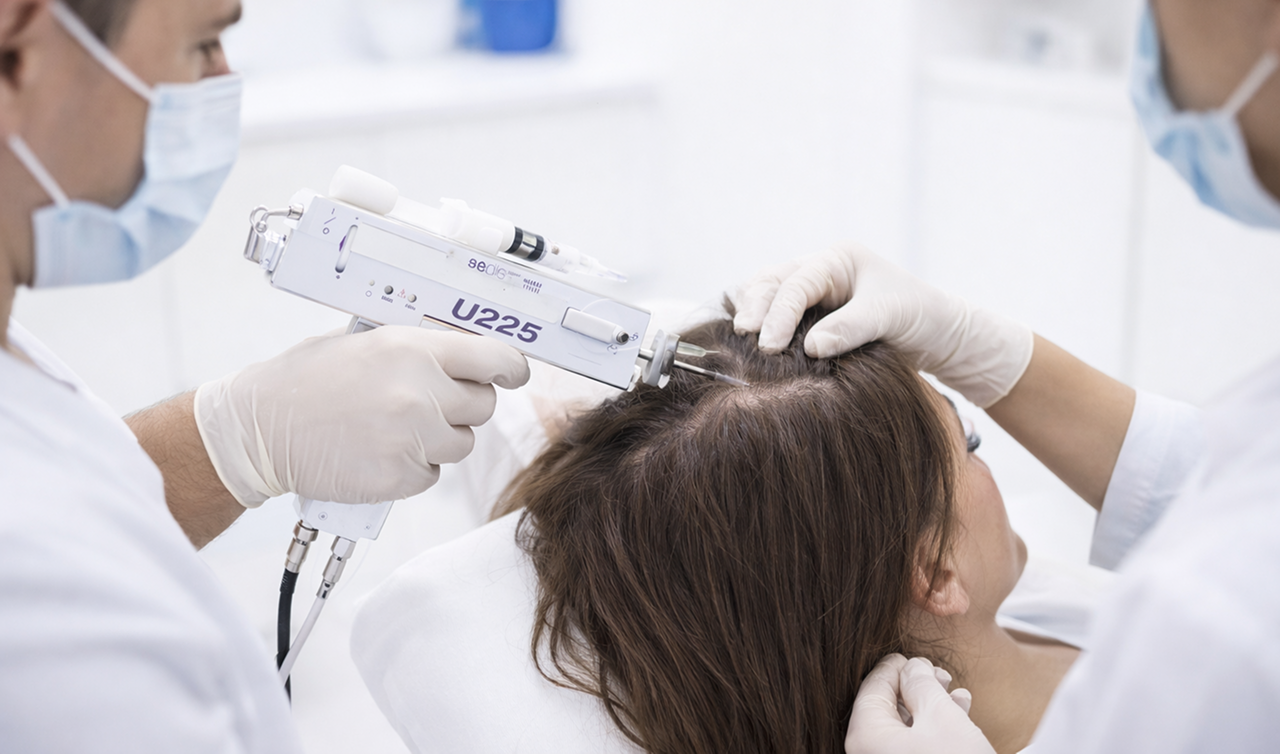
Both mesotherapy and PRP are minimally invasive procedures when performed under medical supervision.
Key safety considerations include:
- Use of sterile technique
- Appropriate patient selection
- Medical-grade preparation standards
- Clear communication of realistic expectations
In a regulated clinical environment such as AS Clinic in Berlin, injectable hair treatments are performed in accordance with established medical standards. However, as with all medical procedures, outcomes vary, and no treatment can guarantee hair regrowth.
In Simple Terms
Short answer: PRP is generally considered more effective for diffuse hair thinning when hair follicles are weakening or undergoing early miniaturization, while mesotherapy may be helpful in cases related to nutritional deficiencies or temporary shedding. The appropriate choice depends on identifying the underlying cause—not following treatment trends.
When Should You Avoid Either Treatment?
Mesotherapy and PRP may be unsuitable if:
- Hair loss is caused by an untreated systemic or autoimmune condition
- There is active scalp infection or inflammation
- Expectations are unrealistic or not aligned with medical assessment
- A thorough medical evaluation is essential before proceeding with any injectable hair treatment.
Final Medical Perspective
Diffuse hair thinning is a complex and often distressing condition, but it should not be approached with generalized or trend-driven solutions.
Mesotherapy and PRP serve distinct roles in hair restoration. Determining which option is appropriate requires:
- Accurate diagnosis
- Review of medical history
- Scalp and hair analysis
- Clear discussion of expected outcomes
At AS Clinic, Berlin, treatment decisions are guided by individualized medical assessment rather than marketing claims or standardized protocols. For patients in the awareness or consideration stage, understanding these differences is an essential first step toward informed and effective care.